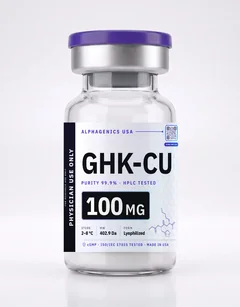
GHK-Cu
50 mgGlyHisLys · Cu²⁺
- Molecular formula
- C14H22CuN6O4
- Molecular weight
- 401.9 g/mol
- CAS number
- 89030-95-5
- PubChem CID
- 71587328
- Length
- 3 aa + Cu
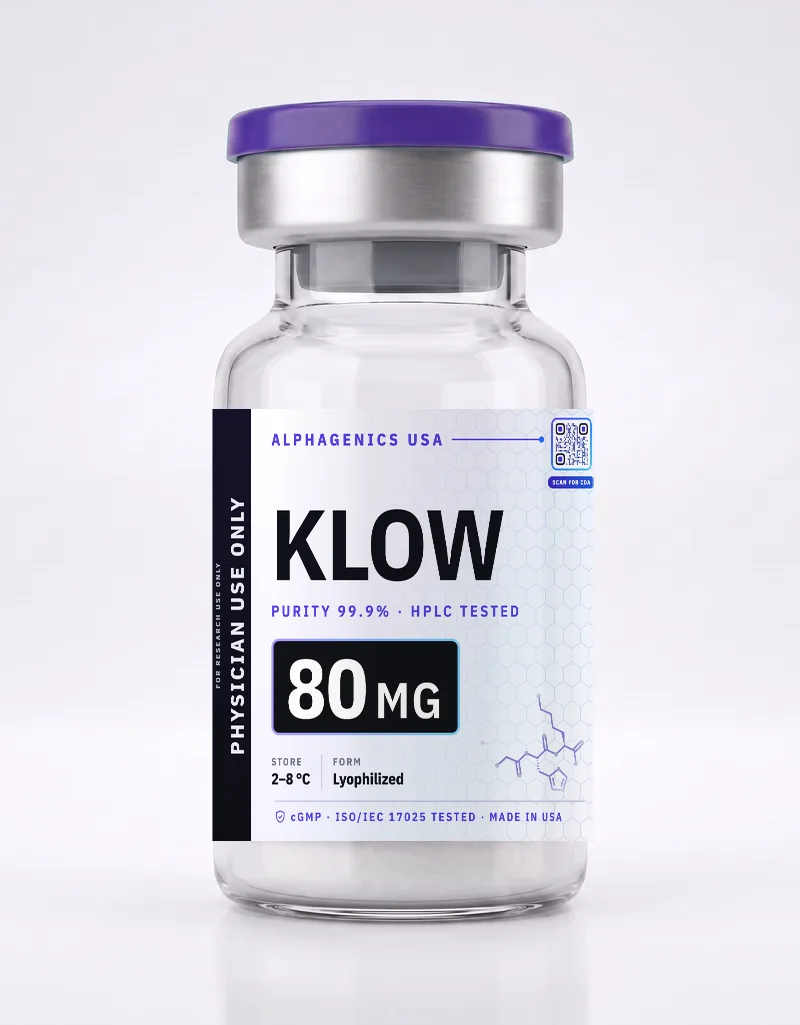
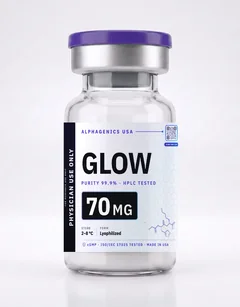
GHK-Cu + BPC-157 + TB-500 + KPV
Combination of research peptides in tissue regeneration and inflammation
KLOW extends the GLOW combination with KPV, the C-terminal tripeptide (Lys-Pro-Val) of alpha-melanocyte-stimulating hormone (α-MSH), studied for its anti-inflammatory activity.
The set brings together four lines of research: collagen synthesis (GHK-Cu), angiogenesis and soft-tissue healing (BPC-157), cell migration and re-epithelialization (TB-500) and modulation of NF-κB inflammatory signaling (KPV). Two molecules are sold under the name TB-500, the N-acetylated fragment Ac-LKKTETQ (short chain) and full-length 43-amino-acid thymosin β4 (long chain); the form present in each lot is stated on its certificate of analysis, and the finding cited for TB-500 comes from full-length thymosin β4.
Quick guide · 5 key points
KLOW adds KPV, an anti-inflammatory fragment of the hormone α-MSH, to the three repair peptides in GLOW. Here are five things the research shows.
GHK-Cu, BPC-157 and TB-500 (depending on the lot, the short-chain Ac-LKKTETQ fragment or long-chain full-length thymosin β4; the cited study used full-length thymosin β4) have been studied for collagen, blood vessels and wound closure. KPV (Lys-Pro-Val) is the tail end of α-MSH: it keeps the anti-inflammatory effect without the pigmentation effect. The evidence is for each component on its own.1,4,6
In human intestinal cells, nanomolar KPV has been associated with inhibition of NF-κB and fewer inflammatory cytokines. It enters cells through the PepT1 transporter. In two mouse models of colitis, oral KPV has been associated with less colitis.2
In human bronchial cells, KPV has been associated with dose-dependent inhibition of NF-κB, MMP-9 activity and IL-8 and eotaxin release. The proposed mechanism is blocking p65 from entering the nucleus.3
GHK-Cu has been associated with more collagen in human fibroblasts at nanomolar doses. In rats, BPC-157 has been associated with better recovery of a cut Achilles tendon, and full-length thymosin β4 (the long chain of TB-500, not the fragment) with up to 61% more re-epithelialization of skin wounds by day 7.4,5,6
KPV data come from cells and animals. In 32 rats, BPC-157 + TB-500 (form not specified) added no benefit over either one alone. Full-length thymosin β4 (not the short-chain fragment) reached phase 2 trials in skin ulcers, and BPC-157 has only three pilot studies in humans. No published study of all four together was found.2,3,9,7,8
Reference amounts of the formulation. The physicochemical data correspond to each individual peptide.
Summary of results reported in the scientific literature. Each finding describes what was observed in the cited study, in its specific population and conditions; it does not constitute a therapeutic indication.
KPV: in murine models of colitis, KPV has shown a reduction in intestinal inflammation, with cellular uptake through the PepT1 transporter.
Dalmasso G et al. Gastroenterology. 2008;134:166-178 · PMID 18061177KPV: in human bronchial epithelial cells, inhibition of NF-κB activation and of the secretion of pro-inflammatory chemokines (IL-8, eotaxin) has been observed.
Land SC. Int J Physiol Pathophysiol Pharmacol. 2012;4:59-73 · PMID 22837805GHK-Cu: in human fibroblasts it has shown increased collagen synthesis at nanomolar concentrations.
Maquart FX et al. FEBS Lett. 1988;238:343-346 · PMID 3169264BPC-157: in a rat Achilles tendon transection model it has been associated with better functional and biomechanical recovery.
Staresinic M et al. J Orthop Res. 2003;21:976-983 · PMID 14554208TB-500 long chain (full-length thymosin β4): in a rat skin wound model, full-length thymosin β4 has shown an increase in re-epithelialization of up to 61% at day 7; this result does not come from the short-chain fragment.
Malinda KM et al. J Invest Dermatol. 1999;113:364-368 · PMID 10469335